
Educators Can Learn How To Reduce Tardies by 75%
What Is The AI Business Growth System for Realtors?

Complete this five-minute assessment to discover the gaps in your lead generation, listing marketing, buyer pipeline, follow-up, YouTube strategy, and AI automation.
Discover the Hidden Gaps That Could Be Costing You Listings, Buyers, and Thousands in Commission Every Year
Before you spend another dollar on leads, let's make sure you're converting the ones you already have.
Schedule Your Founding Beta Partner Setup Session
AI Automation for Real Estate Agents
Capture more leads, respond instantly, automate follow-up, and book more buyer and seller appointments using Voice AI, Conversation AI, Missed Call Text Back, and smart CRM workflows.
View Packages Try A Demo Right Now Start 14-Day Free TrialStop Losing Real Estate Leads
Most agents do not need more random tools. They need one connected AI system that captures, qualifies, nurtures, and books appointments automatically.
Missed Calls
Recover opportunities from Zillow, Realtor.com, Homes.com, yard signs, and website traffic with instant AI follow-up.
Slow Follow-Up
AI responds immediately, so leads do not go cold while you are showing homes or working with clients.
Manual Work
Automate reminders, nurture campaigns, appointment booking, reviews, and lead reactivation.
What the AI Business Growth System Includes
Built for real estate agents who want more appointments, better follow-up, and a professional lead experience 24/7.
Voice AI
Answer inbound calls, qualify buyers and sellers, and route leads automatically.
Conversation AI
Engage website visitors, answer questions, and guide prospects toward appointments.
Missed Call Text Back
Automatically text missed callers so no opportunity disappears into voicemail.
AI CRM Automation
Track leads, trigger workflows, send reminders, and manage pipelines in one place.
Webinar Funnels
Educate buyers, sellers, and prospects while building trust before the consultation.
Cash Offer Request Leads
Capture motivated seller opportunities and automatically follow up with prospects.
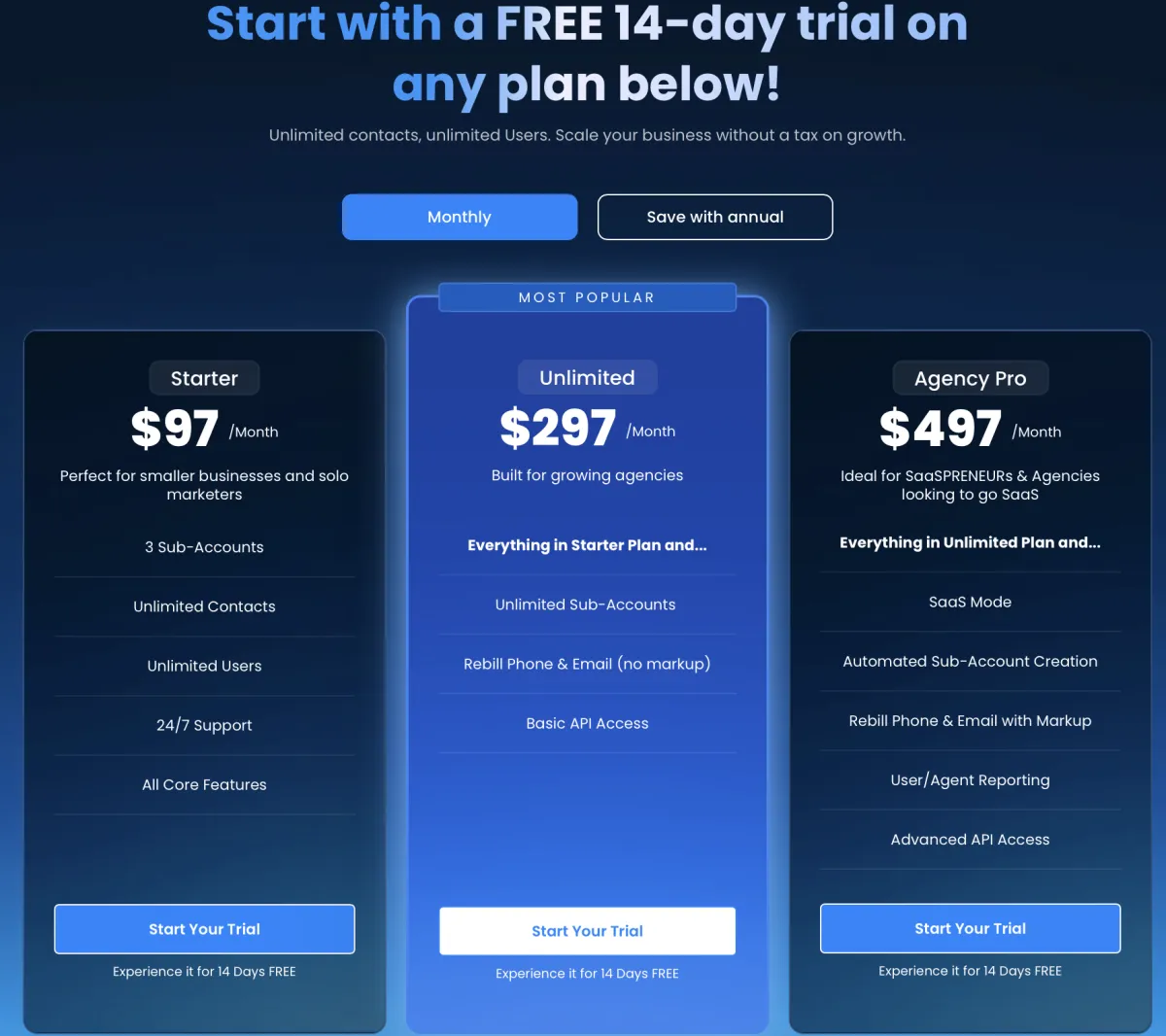
Choose Your AI Automation Package
Start simple or let us help you build the complete AI-powered real estate growth system.
DIY Plan
$197/mo
Best for agents who want to build and manage their own system.
- Conversation AI
- Missed Call Text Back
- AI CRM
- Calendar Booking
- Email & SMS Follow-Up
- Basic Workflows
- Community Training
- Real Estate Knowledge Base(REKB)
- REKB Lifetime Updates
Done-With-You
$397/mo
Best for agents who want coaching, guidance, and faster implementation.
- Everything in DIY
- Voice AI
- Webinar Funnel
- Cash Offer Request System
- AI Appointment Booking
- Personalized ChatGPT Workflows
- Monthly Strategy Session
- Priority Onboarding
- Buyer/Seller Webinar Funnel Slides
Done-For-You
$597/mo
Best for busy agents who want the system built and optimized for them.
- Everything in Done-With-You
- Complete System Setup
- Custom AI Workflows
- Voice AI Customization
- Conversation AI Customization
- CRM Configuration
- Funnel Setup
- Monthly Optimization
- Priority Support
- Customer Journey Customization
Start Your Free 14-Day AI Business Growth Bundle Trial
Experience Voice AI, Conversation AI, Missed Call Text Back, AI CRM, webinar funnels, automated follow-up, and personalized ChatGPT workflows.
Includes a Complimentary Onboarding Session.
Request Your Free TrialHow It Works
We help you move from missed opportunities to a connected AI-powered lead conversion system.
Identify Your Lead Sources
We review where your leads come from: Zillow, Realtor.com, Facebook, website, referrals, Google, or cash offer campaigns.
Install AI Automation
We connect Voice AI, Conversation AI, Missed Call Text Back, CRM workflows, and appointment booking.
Automate Follow-Up
Your system nurtures buyers, sellers, old leads, webinar registrants, and missed-call opportunities automatically.
Book More Appointments
The goal is simple: more qualified conversations, more consultations, and more closed transactions.
Test Drive the AI Demo
Use the chat widget on this page to experience Conversation AI and request a Voice AI demo number.
Built for Real Estate Agents Who Want to Grow Smarter
AI does not replace relationships. It helps agents respond faster, follow up better, and spend more time serving buyers and sellers.
Home Selling & Real Estate Marketing
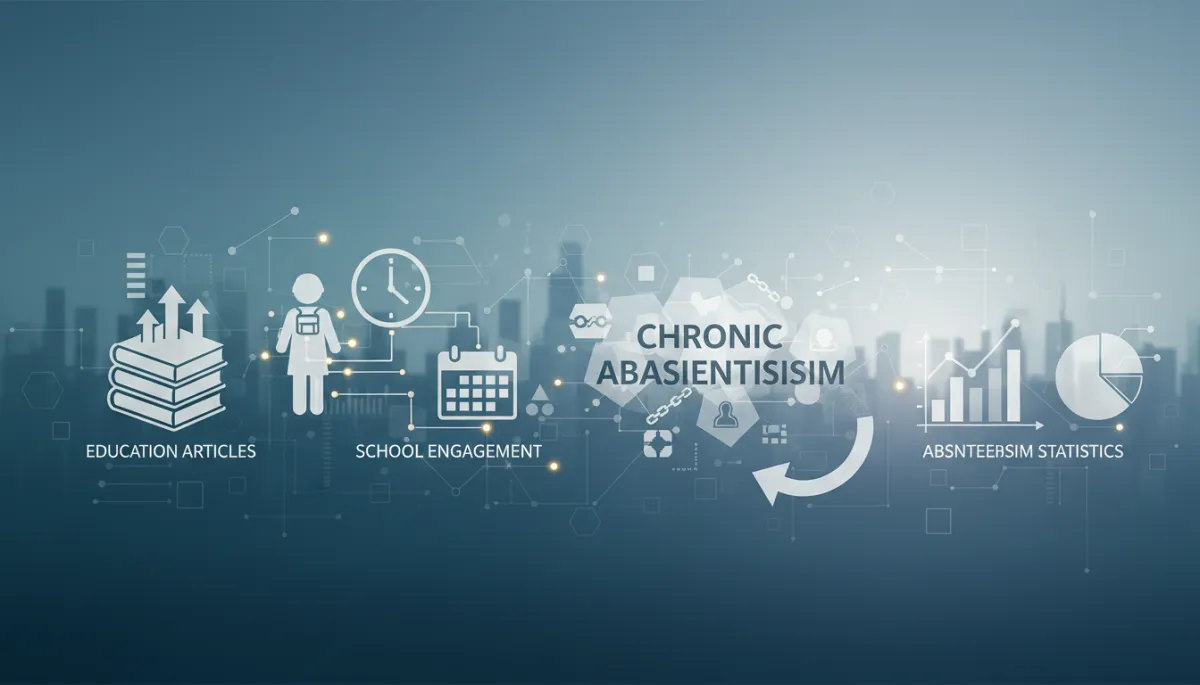
Chronic Absenteeism Reports in US Schools 2026
Education Policy, Chronic Absenteeism, National Reports
Major National Articles and Reports on Chronic Absenteeism in the United States Since June 1, 2026
Since June 1, 2026, a new wave of national reports and education articles has sharpened the picture of Chronic Absenteeism in U.S. schools. For education leaders, policymakers, and nonprofit partners, these publications offer both sobering absenteeism statistics and emerging evidence of what is beginning to work to rebuild student attendance and school engagement.
The State of Chronic Absenteeism in 2026: Key National Signals
Across the latest national reports, one message is consistent: Chronic Absenteeism remains substantially above pre‑pandemic levels, even as some districts and states report gradual improvement. Analyses from the U.S. Department of Education and independent researchers place current national chronic absence in the 22–24% range—nearly one in four students missing at least 10% of instructional days, up from roughly 15% before COVID‑19 (Washington Post, Aug. 13, 2026; Return to Learn Tracker[1][2]).
The Bellwether analysis, “The Shrinking School Year” (July 2026), frames this as the loss of hundreds of millions of instructional days nationwide and estimates nearly 12 million chronically absent students[3]. For professionals charged with improving student outcomes, these absenteeism statistics underscore that attendance is now a central equity and recovery challenge, not a peripheral compliance metric.
📌 Key Takeaway: Multiple independent data sources converge on the same signal: chronic absenteeism is still far above pre‑pandemic baselines, making attendance a core indicator of educational recovery.
Major National Reports Released Since June 1, 2026
District-Level Evidence: SchoolStatus Analyses
On June 2, 2026, SchoolStatus released “How 89 School Districts Reduced Chronic Absenteeism by 36%”, an analysis of 89 districts across nine states serving over 513,000 students[4]. Districts leveraging the SchoolStatus Attend platform achieved an 18% reduction in chronic absenteeism in the first year; among 47 districts with two full years of data, 96% improved, with an average cumulative reduction of 36% (SchoolStatus via PR Newswire, 2026).
A subsequent 2025–26 Attendance Trends Report (Aug. 25, 2026) expanded the lens to 1.1 million students in 142 districts[5]. It reported chronic absenteeism falling to 20.29% in 2025–26, a 6.2% year‑over‑year decline and a 10.3% decline over two years, with notable gains in the early grades and improvements across demographic groups. For practitioners, these national reports provide concrete models for data‑informed communication, proactive outreach, and tiered interventions that are demonstrably shifting student attendance patterns.
💡 Pro Tip: When citing vendor or platform reports, pair percentage gains with student counts and timeframes so decision‑makers can gauge scale and sustainability.
State-Level Absenteeism Statistics: Attendance Works and Partners
Also on June 2, 2026, Attendance Works released “New Data Analysis: Chronic Absence Rates Remain Far Too High Among U.S. Schools”, using data from 31 states[6]. The analysis confirms that, while some states show modest improvement, chronic absence remains elevated in every region. The report pairs absenteeism statistics with “bright spot” examples, highlighting how tailored, prevention‑oriented strategies—such as home visits, transportation supports, and culturally responsive family engagement—can move the needle on school engagement.
At the end of August, the Consortium of Florida Education Foundations, in partnership with the Helios Education Foundation, published “Evidence-Based Interventions to Address Chronic Absenteeism: Strategic Insights for Education Leaders” (Aug. 31, 2026)[7]. Drawing on more than 500 sources, this report situates Florida’s experience within national trends: chronic absenteeism nearly doubled to around 30% in 2021–22 and has receded to roughly 19%, still affecting over 9 million students nationwide. Its framework emphasizes organizational capacity, cross‑sector collaboration, and redesigning how schools present in‑person learning to families—critical levers for rebuilding school engagement at scale.
“Chronic absence remains far too high in every region of the country, but states that pair data transparency with prevention‑oriented supports are beginning to bend the curve.”
— Attendance Works, 2026 Data Analysis[6]
Academic Recovery and Learning Loss: NWEA’s Research Brief
In July 2026, NWEA released “Chronic absenteeism: A continued impediment to academic recovery”, based on MAP Growth data from about 2,000 U.S. districts[8]. This research brief links Chronic Absenteeism directly to slower gains in reading and math, showing that students who are chronically absent recover learning at a significantly reduced pace compared with regularly attending peers. For district leaders, the implication is clear: investing in student attendance is inseparable from any credible academic recovery strategy.
National Media Coverage: The Washington Post and Policy Discourse
Among major education articles, the Washington Post story on Aug. 13, 2026, distilled findings from the American Enterprise Institute and other researchers: 22.6% of U.S. students were chronically absent in the most recent year, a slight decline but still well above the ~15% pre‑pandemic rate[1][9]. Framed as a national crisis, the article has helped move Chronic Absenteeism from technical policy conversation into broader public discourse, influencing state legislatures and local boards as they debate attendance policies, accountability measures, and resource allocation.

Recent national reports translate raw attendance data into actionable strategic priorities.
Policy and Practice: What the 2026 Articles Mean for Student Attendance
The 2026 wave of national reports and education articles converges on several themes for professionals responsible for student attendance and school improvement. First, data transparency and early warning systems are now baseline expectations. Reports from SchoolStatus, state agencies such as Michigan’s Department of Education, and Attendance Works illustrate how near‑real‑time attendance monitoring enables targeted outreach long before students cross the chronic absence threshold[4][6][10].
Second, the research reinforces that school engagement is the linchpin. Analyses from NWEA, Bellwether, and local case studies featured in outlets like E‑School News argue that absenteeism is rarely a simple matter of willful non‑compliance[3][8][11]. Instead, it reflects a mix of academic disengagement, mental health needs, transportation barriers, family responsibilities, and perceptions of school relevance. Accordingly, high‑impact strategies highlighted in these national reports emphasize:
Building positive relationships through mentoring, advisory periods, and consistent adult check‑ins.
Designing engaging, relevant instruction that connects learning to students’ interests and postsecondary goals.
Providing wraparound supports—transportation, health and mental‑health services, and family navigation assistance.
Using asset‑based communication with families, emphasizing partnership rather than punishment.
📌 Key Takeaway: The most cited 2026 reports treat attendance not as a stand‑alone initiative, but as a barometer of school climate, instructional relevance, and community trust.
Implications for Education Leaders and Partner Organizations
For superintendents, principals, nonprofit partners, and policy advocates, the recent national reports on Chronic Absenteeism offer both caution and direction. The caution is clear in the absenteeism statistics: even with three consecutive years of improvement in some systems, current rates remain structurally higher than before the pandemic, with disproportionate impact on students of color, English learners, and those experiencing poverty[1][2][6][7].
The direction lies in the growing consensus across education articles and research briefs: attendance work must be integrated into core instructional, equity, and community‑engagement strategies. Treating student attendance as a standalone initiative or a compliance exercise is no longer viable. Instead, the 2026 literature points toward a comprehensive approach in which:
Chronic Absenteeism metrics are embedded in strategic plans, continuous improvement cycles, and board reporting.
Cross‑sector partners—health, housing, transportation, youth development—are engaged as co‑owners of attendance solutions.
Professional learning for educators includes interpreting absenteeism statistics and designing classroom‑level responses that foster belonging and relevance.
Moving Forward: Using 2026 Insights to Strengthen School Engagement
Taken together, the major national articles and reports published since June 1, 2026, offer a robust evidence base for action. They confirm that reducing Chronic Absenteeism is possible—as shown by SchoolStatus districts, state “bright spots,” and Florida’s emerging progress—but only when systems pair strong data practices with authentic efforts to deepen school engagement and address underlying barriers to student attendance[4][5][6][7].
For professionals, the next phase of work will involve translating these national reports into local implementation plans, aligning resources, and sustaining focus over multiple years. As new education articles and research briefs continue to appear, the most effective organizations will treat them not as one‑off alarms, but as ongoing guidance for building schools where every student is expected, supported, and present.
📌 Key Takeaway: If your chronic absenteeism strategy is not working, try building an educator innovation sandbox at your school. Learn more at teachleadandinspire.com/eis.
References
Washington Post. (2026, August 13). More than one in five U.S. students is still chronically absent, new data show. Washington, DC: Author. (Summary as cited in national coverage of chronic absenteeism.)
Return to Learn Tracker. (2026). Chronic absenteeism and instructional time loss dashboard. Data tool developed by the American Enterprise Institute and partners, summarizing post‑pandemic attendance patterns.
Bellwether. (2026, July). The Shrinking School Year. Washington, DC: Bellwether Education Partners. Analysis of lost instructional days and estimates of nationally chronically absent students.
SchoolStatus. (2026, June 2). How 89 School Districts Reduced Chronic Absenteeism by 36%. SchoolStatus Attend impact analysis, summarized via PR Newswire.
SchoolStatus. (2026, August 25). 2025–26 Attendance Trends Report. Multi‑district analysis of chronic absenteeism trends across 142 districts serving 1.1 million students.
Attendance Works. (2026, June 2). New Data Analysis: Chronic Absence Rates Remain Far Too High Among U.S. Schools. San Francisco, CA: Attendance Works. State‑level analysis using data from 31 states, with “bright spot” examples.
Consortium of Florida Education Foundations & Helios Education Foundation. (2026, August 31). Evidence-Based Interventions to Address Chronic Absenteeism: Strategic Insights for Education Leaders. Gainesville, FL: CFEF. Synthesis of more than 500 sources with a focus on Florida and national trends.
NWEA. (2026, July). Chronic absenteeism: A continued impediment to academic recovery. Portland, OR: NWEA. Research brief using MAP Growth data from approximately 2,000 districts to link attendance and learning recovery.
American Enterprise Institute (AEI). (2026). Post‑pandemic student attendance and chronic absenteeism estimates. Washington, DC: AEI. Analytic work cited in national media coverage, including the Washington Post.
Michigan Department of Education. (2025–2026). Chronic Absenteeism and Early Warning Systems: Statewide Attendance Initiatives. Lansing, MI: MDE. State agency publications referenced in discussions of early warning and data transparency.
E‑School News. (2025–2026). Case studies on district strategies to combat chronic absenteeism. Bethesda, MD: E‑School Media. Selected articles highlighting local implementation stories and engagement strategies.

2026 Modern Real Estate Agent
Do You Want To Do It Yourself ?
Real Estate Agent
Missed Call Text Back - ROI Calculator
Have You Ever Missed A Call That Cost You a Listing or A Sale Because You Didn't Answer Your Phone?
Missed Call Text Back ROI Calculator
See how much money real estate agents may be leaving on the table.
Plug In Your Numbers To See How Much Missed Call-Text Back Can Save You Every Month
Lifetime Value of one customer (or Average Commission per sale)
Enter estimate of how many call you miss per week
Enter Your closing ratio per lead
Hit the calculate button to see how much we can save you
FREE AI Masterclass For Realtors
Stop Buying More Leads.
Start Booking Appointments.
Learn the AI system that generates buyer and seller leads—and turns them into booked consultations without chasing every prospect manually.

The Traditional Lead Model is Broken
Most agents do not have a lead problem; they have a follow-up problem
You’re buying more leads than ever, but your calendar is empty. You spend hours dialing numbers that go straight to voicemail, sending texts that get ignored, and chasing prospects who were never serious in the first place.
Every month, thousands of dollars in ad spend vanish into a black hole of follow-up fatigue. The harder you work, the more the system feels rigged against you. You don't have a traffic problem: you have a conversion problem.
It’s time to stop chasing ghosts and start implementing a predictable appointment engine.
THE MASTERCLASS
What You Will Learn
Master the exact frameworks top producers use to turn raw leads into booked appointments automatically. No fluff, just actionable systems.
How to respond to buyer and seller leads instantly.
How to follow up automatically with SMS and email.
How Conversation AI and Voice AI can help qualify prospects.
How missed call text back recovers lost opportunities.
How to turn buyer and seller leads into booked consultations using one connected system.Bullet List 5
The Appointment Engine
Build an automated system that qualifies and books leads 24/7 without your manual input.
Ghost-Proof Follow-up
Deploy multi-channel touchpoints that guarantee responses from leads who previously went cold.
High-Converting Scripts
Exactly what to say to overcome objections and lock in commitments within the first 5 minutes.
Automated Lead Nurturing
Keep your pipeline warm with sequence frameworks that build trust before you even speak.
Frictionless Scheduling
Remove the friction from booking and increase show-up rates with bulletproof reminders.
HOW IT WORKS
The 6-Step Appointment Engine
The exact roadmap from cold prospect to confirmed calendar booking.
Targeted Lead Capture
Attract high-intent buyers and sellers through optimized, data-driven channels.
Instant Qualification
Automatically filter out tire-kickers so you only spend time on serious prospects.
Automated Value Delivery
Build immediate trust using pre-built, high-value content sequences.
Strategic Follow-Up
Keep leads engaged with a multi-touch sequence without lifting a finger.
Smart Intent Scoring
Identify exactly when a prospect is primed and ready to take action.
Seamless Calendar Booking
Convert warm leads into confirmed appointments directly on your schedule.

🏆 Amazon Future Engineer Teacher of the Year (2023)
🎓 Doctor of Education (Ed.D.)
🇺🇸 Retired U.S. Marine Major
🤖 Certified AI Prompt Engineer
🏡 Real Estate Marketing & AI Automation Specialist
YOUR EXPERT GUIDE
Meet Your Host
Jordan B Smith Jr. Ed.D.
I'm a retired educator, retired Marine Major, Certified AI Prompt Engineer, and GoHighLevel automation strategist.
After spending more than two decades building educational systems and helping organizations improve performance, I began studying the biggest challenge facing today's real estate agents—not just finding and attracting leads, but consistently following up with them.
While working toward my real estate license, I discovered that many of the industry's top coaches and marketing companies were using the same underlying technology to generate appointments. Rather than simply buying more leads, successful agents were building automated systems that captured, nurtured, qualified, and converted prospects into buyer and seller consultations.
Today, I help real estate agents implement those same AI-powered systems using GoHighLevel—including RE buyer & seller webinar funnels, AI Voice Assistants, Conversation AI, automated email and SMS follow-up, CRM automation, and appointment booking.
My mission is simple:
Help real estate agents stop chasing leads and start building predictable systems that turn buyer and seller leads into booked consultations.
He doesn't just teach theory: he provides the exact blueprints working in today's market to completely eliminate follow-up friction.
Jordan B. Smith Jr. Ed.D.
Creator, The Appointment Engine
Ready to Stop Chasing Leads?
FREE MASTERCLASS
Join 2,500+ agents already using the system
© 2026 Annapolis Creed, LLC. dab Teach, Lead, and Inspire All rights reserved.