
Educators Can Learn How To Reduce Tardies by 75%
What Is The AI Business Growth System for Realtors?

Complete this five-minute assessment to discover the gaps in your lead generation, listing marketing, buyer pipeline, follow-up, YouTube strategy, and AI automation.
Discover the Hidden Gaps That Could Be Costing You Listings, Buyers, and Thousands in Commission Every Year
Before you spend another dollar on leads, let's make sure you're converting the ones you already have.
Schedule Your Founding Beta Partner Setup Session
AI Automation for Real Estate Agents
Capture more leads, respond instantly, automate follow-up, and book more buyer and seller appointments using Voice AI, Conversation AI, Missed Call Text Back, and smart CRM workflows.
View Packages Try A Demo Right Now Start 14-Day Free TrialStop Losing Real Estate Leads
Most agents do not need more random tools. They need one connected AI system that captures, qualifies, nurtures, and books appointments automatically.
Missed Calls
Recover opportunities from Zillow, Realtor.com, Homes.com, yard signs, and website traffic with instant AI follow-up.
Slow Follow-Up
AI responds immediately, so leads do not go cold while you are showing homes or working with clients.
Manual Work
Automate reminders, nurture campaigns, appointment booking, reviews, and lead reactivation.
What the AI Business Growth System Includes
Built for real estate agents who want more appointments, better follow-up, and a professional lead experience 24/7.
Voice AI
Answer inbound calls, qualify buyers and sellers, and route leads automatically.
Conversation AI
Engage website visitors, answer questions, and guide prospects toward appointments.
Missed Call Text Back
Automatically text missed callers so no opportunity disappears into voicemail.
AI CRM Automation
Track leads, trigger workflows, send reminders, and manage pipelines in one place.
Webinar Funnels
Educate buyers, sellers, and prospects while building trust before the consultation.
Cash Offer Request Leads
Capture motivated seller opportunities and automatically follow up with prospects.
Choose Your AI Automation Package
Start simple or let us help you build the complete AI-powered real estate growth system.
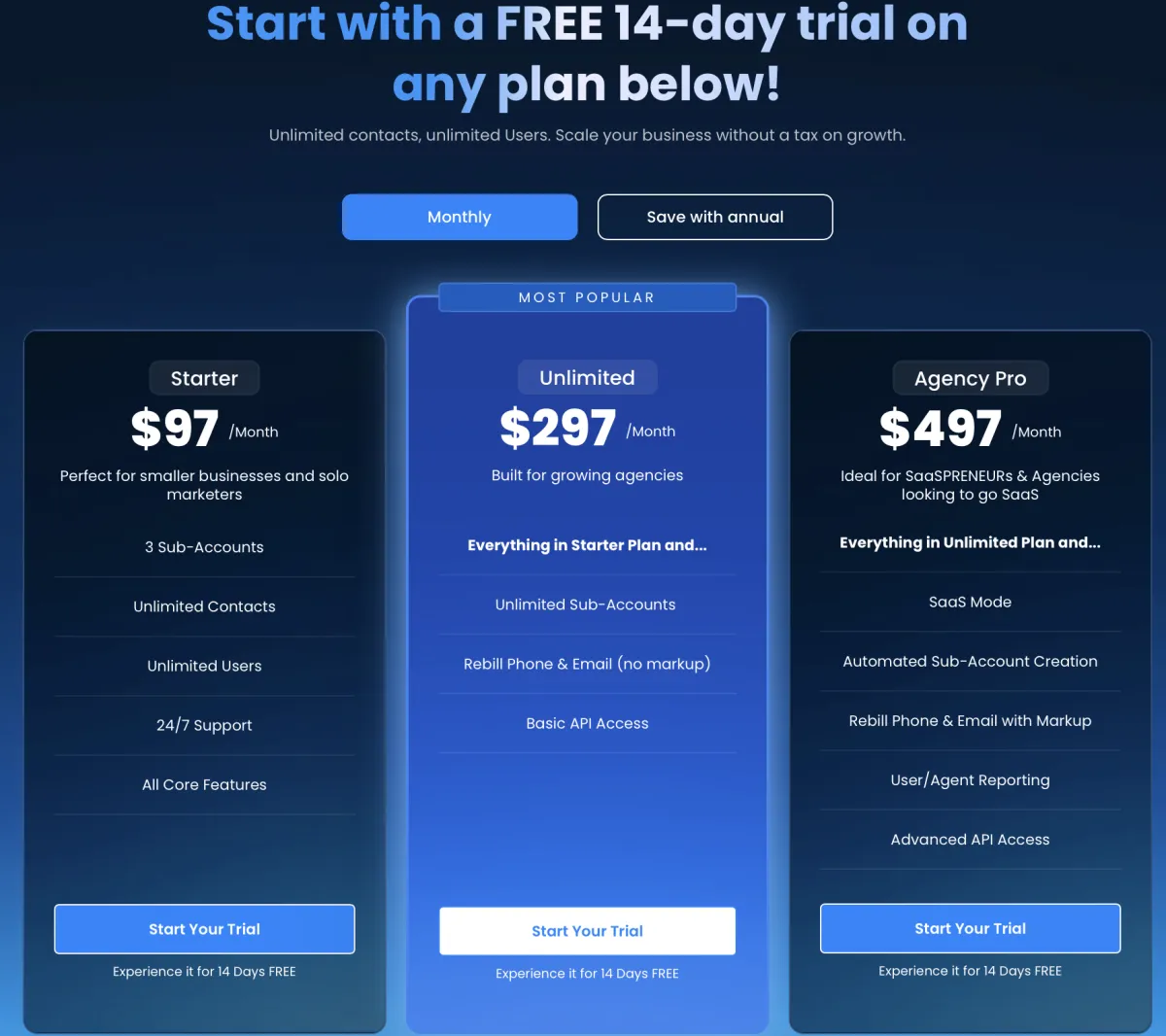
DIY Plan
$197/mo
Best for agents who want to build and manage their own system.
- Conversation AI
- Missed Call Text Back
- AI CRM
- Calendar Booking
- Email & SMS Follow-Up
- Basic Workflows
- Community Training
- Real Estate Knowledge Base(REKB)
- REKB Lifetime Updates
Done-With-You
$397/mo
Best for agents who want coaching, guidance, and faster implementation.
- Everything in DIY
- Voice AI
- Webinar Funnel
- Cash Offer Request System
- AI Appointment Booking
- Personalized ChatGPT Workflows
- Monthly Strategy Session
- Priority Onboarding
- Buyer/Seller Webinar Funnel Slides
Done-For-You
$597/mo
Best for busy agents who want the system built and optimized for them.
- Everything in Done-With-You
- Complete System Setup
- Custom AI Workflows
- Voice AI Customization
- Conversation AI Customization
- CRM Configuration
- Funnel Setup
- Monthly Optimization
- Priority Support
- Customer Journey Customization
Start Your Free 14-Day AI Business Growth Bundle Trial
Experience Voice AI, Conversation AI, Missed Call Text Back, AI CRM, webinar funnels, automated follow-up, and personalized ChatGPT workflows.
Includes a Complimentary Onboarding Session.
Request Your Free TrialHow It Works
We help you move from missed opportunities to a connected AI-powered lead conversion system.
Identify Your Lead Sources
We review where your leads come from: Zillow, Realtor.com, Facebook, website, referrals, Google, or cash offer campaigns.
Install AI Automation
We connect Voice AI, Conversation AI, Missed Call Text Back, CRM workflows, and appointment booking.
Automate Follow-Up
Your system nurtures buyers, sellers, old leads, webinar registrants, and missed-call opportunities automatically.
Book More Appointments
The goal is simple: more qualified conversations, more consultations, and more closed transactions.
Test Drive the AI Demo
Use the chat widget on this page to experience Conversation AI and request a Voice AI demo number.
Built for Real Estate Agents Who Want to Grow Smarter
AI does not replace relationships. It helps agents respond faster, follow up better, and spend more time serving buyers and sellers.
Home Selling & Real Estate Marketing

Chronic Absenteeism in California: Leadership Agenda 2026
Education Leadership, Chronic Absenteeism, California Schools
Chronic Absenteeism in California: A Leadership Agenda for 2026 and Beyond
Chronic absenteeism in California has eased from its pandemic peak, but it remains a defining challenge for education leadership. This article translates the latest data into concrete priorities for superintendents, cabinet members, and site leaders.
Where California Stands Now on Chronic Absenteeism
Chronic absenteeism—missing 10 percent or more of instructional days, excused and unexcused—remains elevated across California. In the 2024–25 school year, the statewide chronic absenteeism rate was 19.4 percent, representing roughly 1.1 million students who missed at least 18 days of school (PPIC; CDE). This is a clear improvement from the 2021–22 peak of about 30 percent, but still far above the pre‑pandemic baseline of 12–13 percent.
The trajectory since 2021–22 shows steady but slowing gains: 24.9 percent in 2022–23, 20.4 percent in 2023–24, and 19.4 percent in 2024–25 (CSBA). For education leaders, the message is sobering: the easy wins are behind us. Without more intentional strategies, improvement could stall well above acceptable levels.
Who Is Most Affected? A Closer Look at California’s Data
Chronic absenteeism is not evenly distributed. It clusters by grade span, race and ethnicity, and student circumstance—patterns that should shape every district’s strategic plan.
Grade spans. In 2024–25, chronic absenteeism reached 23 percent in TK–K and 24 percent in grades 9–12 (PPIC). Early learners are missing critical foundational instruction, while high schoolers are at heightened risk for course failure and dropping out.
Racial and ethnic disparities. Nearly one‑third of Native American, Black, and Pacific Islander students were chronically absent in 2024–25. Latino students experienced a rate of 22 percent, compared with 15 percent for White students, 9 percent for Filipino students, and just 8 percent for Asian students (PPIC).
Students facing instability. Foster youth and students experiencing homelessness had chronic absenteeism rates between 35–37 percent, the highest of any group (PPIC). Socioeconomically disadvantaged students and students with disabilities also face rates well above the state average; for TK–8, these groups reached 24.1 percent and 27.8 percent respectively (AB 1763 analysis).
At the school level, the share of campuses with “high” (20–29 percent) or “extreme” (30 percent or more) chronic absenteeism dropped from 75 percent in 2021–22 to 47 percent in 2024–25—but that is still more than double pre‑pandemic levels (CSBA). High‑poverty schools remain the most affected, underscoring the equity stakes for California’s education system.
Why Chronic Absenteeism Demands Executive-Level Attention
For education leaders, chronic absenteeism is not just a compliance metric. It is a leading indicator of academic, fiscal, and community health:
Academic outcomes. Chronically absent students miss an average of 33 days per year—nearly double the 18‑day threshold (PPIC). Research consistently links these patterns to lower achievement, weaker literacy and numeracy, and reduced graduation rates.
Funding and staffing. California’s funding model, tied to average daily attendance (ADA), means that persistent absences directly erode district revenue. Statewide ADA has not fully recovered to its pre‑COVID level of 95.7 percent, remaining roughly two percentage points lower (LAO). For many LEAs, this translates into millions of dollars in lost funding and difficult budget decisions.
Long‑term equity. Because chronic absenteeism disproportionately affects students of color, English Learners, foster youth, and students experiencing homelessness, it amplifies long‑standing gaps in opportunity and outcomes. Addressing attendance is therefore central to any serious equity agenda.
📌 Key Takeaway: Chronic absenteeism is both a barometer and a driver of system health. Treat it as a core leadership priority, not a side project.
Policy Shifts: Attendance Recovery and New Data for 2026
California’s policy landscape is evolving in response to these trends. Beginning in 2025–26, the state’s Attendance Recovery (AR) program, authorized through SB 153 and SB 176, allows students to make up absences outside regular school hours. LEAs can recover up to 10 days of ADA per student (CDE).
Importantly for education leadership, the 2026 California School Dashboard will not adjust its chronic absenteeism indicator based on AR days. Instead, the state plans to publish an Alternative Chronic Absenteeism Rate in late 2026, once End‑of‑Year 3 data are compiled (CDE AR webinar). That means leaders will need to navigate—and communicate—two related but distinct attendance metrics.

Site leaders who own their data cycles are driving the largest attendance gains.
Leadership Priorities: From Data to Daily Practice
Given these realities, how should California’s education leadership respond? The most effective districts are moving beyond one‑off initiatives toward a coherent attendance strategy anchored in five leadership moves:
Make attendance a system‑wide goal, not a siloed function. Embed chronic absenteeism targets into Local Control and Accountability Plans (LCAPs), strategic plans, and principal evaluations. Ensure that cabinet‑level conversations about academics, mental health, and operations all include attendance implications.
Use disaggregated data to focus your efforts. Leverage the California School Dashboard and DataQuest to monitor chronic absenteeism by grade, school, and subgroup. For example, TK–8 chronic absenteeism stands at 17.1 percent overall, but rises to 37.3 percent for foster youth and 34.9 percent for students experiencing homelessness (AB 1763 analysis). Direct additional staffing, outreach, and wraparound services where the data show the greatest need.
Invest in relationships and belonging. Research and California experience both point to connection as a key driver of attendance. Leaders can prioritize advisory periods, culturally responsive teaching, and student voice structures that help young people feel known and valued—especially in high‑poverty schools where absenteeism remains most severe.
Align supports around the highest‑risk students. Coordinate attendance teams with McKinney‑Vento liaisons, foster youth services, special education, and community‑based partners. Chronic absenteeism among these students is often rooted in housing instability, transportation barriers, health needs, or caregiving responsibilities that require cross‑agency solutions, not just school‑site reminders.
Communicate clearly with families about why every day matters. Many families underestimate the impact of “a day here and there.” District‑wide campaigns that translate 10 percent absence into lost instructional time—and pair that message with practical supports like transportation assistance, flexible make‑up work, and Attendance Recovery opportunities—can reset community norms around attendance.
💡 Pro Tip for Superintendents: Designate a senior leader as “Chief Attendance Champion” with clear authority to coordinate data, communications, and interventions across departments.
Looking Ahead: Building a Culture of Presence in California Schools
By late 2026, California’s Alternative Chronic Absenteeism Rate will provide a more nuanced view of how Attendance Recovery and other interventions are affecting student presence. Yet the core challenge will remain the same: ensuring that every student, in every community, is in school often enough to benefit from the instruction, relationships, and opportunities our systems are working so hard to provide.
For education leadership in California, chronic absenteeism is both a warning light and a call to action. The state has moved past the worst of the pandemic spike, but the distance between today’s 19.4 percent rate and the pre‑pandemic benchmark is still too great—especially for the students who depend most on public education for stability and opportunity. The next phase of work will require sustained focus, smarter use of data, and deep partnerships with families and communities. In short, it will require leadership.
✅ Next Step for Education Leaders: Learn how to turn your attendance data into a proactive, districtwide action plan. Visit www.teachleadandinspire.com/eis to follow and build an Educator Innovation Sandbox tailored to your schools.

2026 Modern Real Estate Agent
Do You Want To Do It Yourself ?
Real Estate Agent
Missed Call Text Back - ROI Calculator
Have You Ever Missed A Call That Cost You a Listing or A Sale Because You Didn't Answer Your Phone?
Missed Call Text Back ROI Calculator
See how much money real estate agents may be leaving on the table.
Plug In Your Numbers To See How Much Missed Call-Text Back Can Save You Every Month
Lifetime Value of one customer (or Average Commission per sale)
Enter estimate of how many call you miss per week
Enter Your closing ratio per lead
Hit the calculate button to see how much we can save you
FREE AI Masterclass For Realtors
Stop Buying More Leads.
Start Booking Appointments.
Learn the AI system that generates buyer and seller leads—and turns them into booked consultations without chasing every prospect manually.

The Traditional Lead Model is Broken
Most agents do not have a lead problem; they have a follow-up problem
You’re buying more leads than ever, but your calendar is empty. You spend hours dialing numbers that go straight to voicemail, sending texts that get ignored, and chasing prospects who were never serious in the first place.
Every month, thousands of dollars in ad spend vanish into a black hole of follow-up fatigue. The harder you work, the more the system feels rigged against you. You don't have a traffic problem: you have a conversion problem.
It’s time to stop chasing ghosts and start implementing a predictable appointment engine.
THE MASTERCLASS
What You Will Learn
Master the exact frameworks top producers use to turn raw leads into booked appointments automatically. No fluff, just actionable systems.
How to respond to buyer and seller leads instantly.
How to follow up automatically with SMS and email.
How Conversation AI and Voice AI can help qualify prospects.
How missed call text back recovers lost opportunities.
How to turn buyer and seller leads into booked consultations using one connected system.Bullet List 5
The Appointment Engine
Build an automated system that qualifies and books leads 24/7 without your manual input.
Ghost-Proof Follow-up
Deploy multi-channel touchpoints that guarantee responses from leads who previously went cold.
High-Converting Scripts
Exactly what to say to overcome objections and lock in commitments within the first 5 minutes.
Automated Lead Nurturing
Keep your pipeline warm with sequence frameworks that build trust before you even speak.
Frictionless Scheduling
Remove the friction from booking and increase show-up rates with bulletproof reminders.
HOW IT WORKS
The 6-Step Appointment Engine
The exact roadmap from cold prospect to confirmed calendar booking.
Targeted Lead Capture
Attract high-intent buyers and sellers through optimized, data-driven channels.
Instant Qualification
Automatically filter out tire-kickers so you only spend time on serious prospects.
Automated Value Delivery
Build immediate trust using pre-built, high-value content sequences.
Strategic Follow-Up
Keep leads engaged with a multi-touch sequence without lifting a finger.
Smart Intent Scoring
Identify exactly when a prospect is primed and ready to take action.
Seamless Calendar Booking
Convert warm leads into confirmed appointments directly on your schedule.

🏆 Amazon Future Engineer Teacher of the Year (2023)
🎓 Doctor of Education (Ed.D.)
🇺🇸 Retired U.S. Marine Major
🤖 Certified AI Prompt Engineer
🏡 Real Estate Marketing & AI Automation Specialist
YOUR EXPERT GUIDE
Meet Your Host
Jordan B Smith Jr. Ed.D.
I'm a retired educator, retired Marine Major, Certified AI Prompt Engineer, and GoHighLevel automation strategist.
After spending more than two decades building educational systems and helping organizations improve performance, I began studying the biggest challenge facing today's real estate agents—not just finding and attracting leads, but consistently following up with them.
While working toward my real estate license, I discovered that many of the industry's top coaches and marketing companies were using the same underlying technology to generate appointments. Rather than simply buying more leads, successful agents were building automated systems that captured, nurtured, qualified, and converted prospects into buyer and seller consultations.
Today, I help real estate agents implement those same AI-powered systems using GoHighLevel—including RE buyer & seller webinar funnels, AI Voice Assistants, Conversation AI, automated email and SMS follow-up, CRM automation, and appointment booking.
My mission is simple:
Help real estate agents stop chasing leads and start building predictable systems that turn buyer and seller leads into booked consultations.
He doesn't just teach theory: he provides the exact blueprints working in today's market to completely eliminate follow-up friction.

Jordan B. Smith Jr. Ed.D.
Creator, The Appointment Engine
Ready to Stop Chasing Leads?
FREE MASTERCLASS
Join 2,500+ agents already using the system
© 2026 Annapolis Creed, LLC. dab Teach, Lead, and Inspire All rights reserved.